


7 Roof to Wall Flashing Failure Signs
- alex00449
- Apr 27
- 5 min read
A small stain at the top of an interior wall can point to a bigger exterior problem. One of the most common and most overlooked leak points we see is where the roof meets a vertical wall. Knowing the roof to wall flashing failure signs helps buyers, sellers, and homeowners catch trouble early, before a modest repair turns into damaged framing, sheathing, insulation, or interior finishes.
This area matters because it handles a lot of water in a small space. Rain runs down the roof slope, hits the wall transition, and depends on flashing, underlayment, siding clearances, and drainage details all working together. When one part is missing, poorly installed, rusted, or covered by later repairs, water often finds a path behind the exterior instead of off the roof.
Why roof-to-wall transitions fail
Roof-to-wall flashing is not just one piece of metal. In many assemblies, it includes step flashing, counter flashing or siding overlap, sealant at select points, and the surrounding roof materials that direct water properly. The transition also depends on the roof pitch, the type of siding or cladding, and whether debris tends to collect in that section.
In Southern California, this detail can be easy to underestimate because long dry periods make minor defects seem harmless. Then a hard rain exposes months or years of hidden moisture entry all at once. Coastal conditions can also accelerate corrosion, while sun exposure can dry, crack, and shrink sealants faster than many owners expect.
7 roof to wall flashing failure signs
1. Water staining near the top of interior walls or ceilings
A brown stain, bubbling paint, or soft drywall near the ceiling line is often the first visible clue. The leak may not sit directly below the failed flashing point, since water can travel along framing or roof sheathing before showing itself inside. That is why interior staining should never be dismissed as a one-time event without checking the exterior transition above it.
If the stain appears after wind-driven rain, that is even more suggestive. Roof-to-wall failures often show up during storms that push water sideways, not just downward.
2. Damaged, loose, or poorly cut siding where the roof meets the wall
When siding is too tight to the roof surface, it can trap moisture and debris right where flashing needs to drain. When siding is cut too high, it may expose flashing in a way that invites water entry or UV wear. Cracked stucco, swollen wood trim, and fiber cement deterioration near the roof line all deserve a closer look.
The issue is not always the siding itself. Sometimes the siding damage is simply the visible symptom of flashing that was never integrated correctly behind it.
3. Rusted, bent, or exposed flashing metal
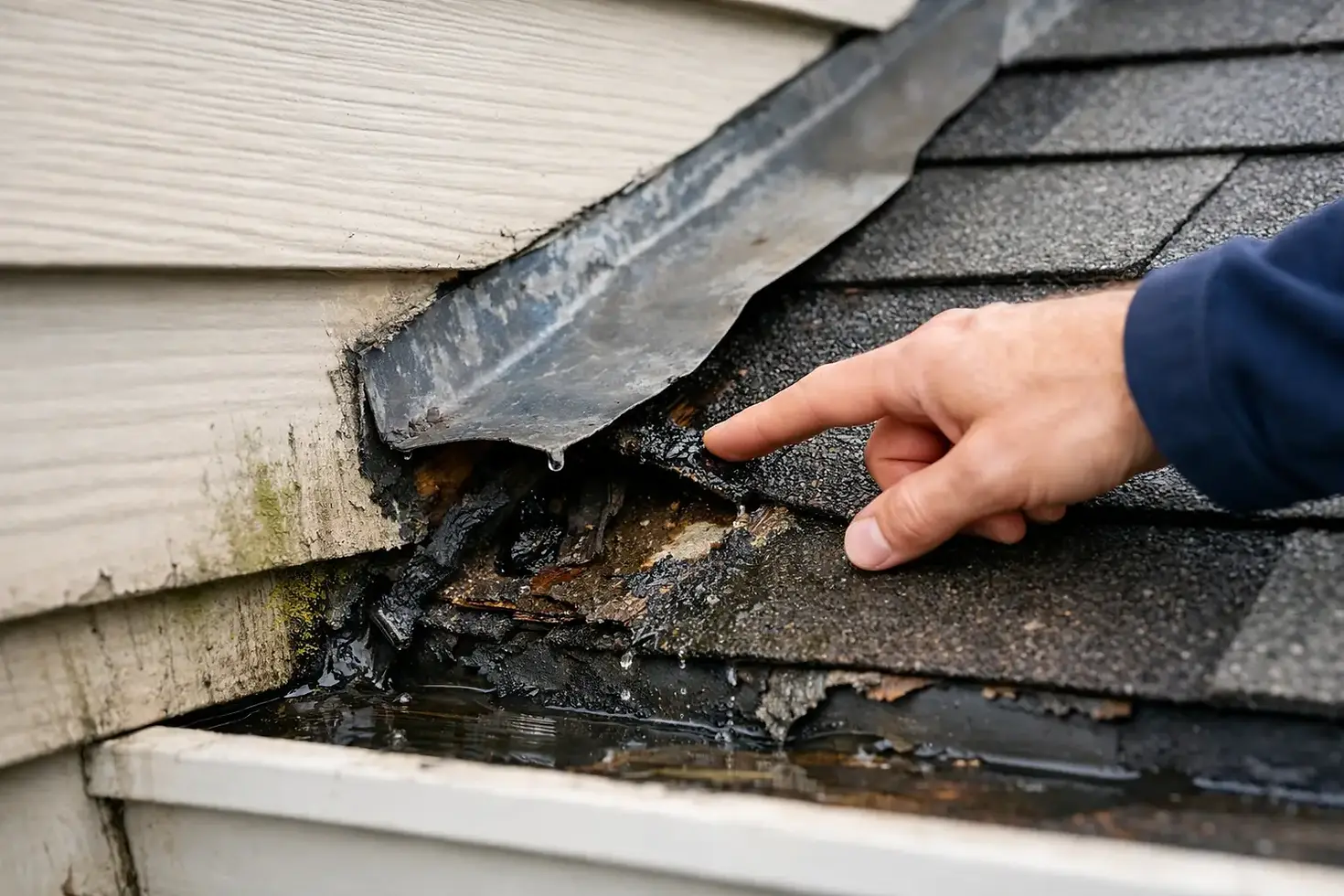
Visible metal flashing is not automatically wrong, but it should look intentional and serviceable. Rust, pinholes, lifted edges, and bent sections suggest the assembly may no longer shed water as designed. Exposed fasteners in the wrong location can also create direct entry points.
Older repairs often rely on roof cement or excessive caulk smeared over metal joints. That may slow leakage for a while, but it is usually a patch, not a proper correction. When flashing has been patched repeatedly, it often means the original water path problem was never solved.
4. Debris buildup in the roof-to-wall channel
Leaves, needles, and granule buildup can hold moisture against flashing and roofing materials. They also slow drainage and create a dam effect, especially where a sidewall meets a lower roof section. In tile and composition roof systems alike, chronic debris buildup increases the chance that water will back up into vulnerable seams.
This is one of those details that depends on the property. A clean transition may perform fine for years, while a shaded area beneath overhanging trees may need regular maintenance to stay dry.
5. Soft roof decking or deteriorated roofing near the wall
During an inspection, one concern is whether the roof surface feels soft or uneven near a wall intersection. That can point to long-term moisture intrusion below the finished roof covering. On composition roofs, shingles may curl, loosen, or show abnormal wear in a concentrated strip along the wall. On tile roofs, the underlayment below can fail long before the tile itself looks dramatic from the ground.
This is where a systems-based view matters. The problem may involve flashing, but it may also involve underlayment laps, blocked drainage, or an adjacent gutter issue feeding too much water into the transition.
6. Mold-like growth, rot, or peeling paint on exterior trim
Persistent moisture at a roof-to-wall connection often shows up on fascia, trim boards, eaves, or nearby wall finishes. Paint that peels repeatedly in the same area, wood that feels soft, or dark organic growth can all indicate that water is not exiting the assembly cleanly.
Not every stain is active leakage, and not every dark mark is mold. Still, repeat moisture indicators around a wall-to-roof junction deserve professional evaluation because the repair scope changes quickly once structural wood begins to deteriorate.
7. Leak repairs that keep returning to the same spot
A repeat leak is a sign worth taking seriously. If a seller mentions that the same area has been sealed more than once, or if you see multiple layers of patching around a sidewall, there is a good chance the visible fix was treating the symptom rather than the assembly.
This is especially relevant in real estate transactions. A low-cost patch can make an active leak seem quiet for the moment, but it may not provide the clarity a buyer or agent needs when evaluating future repair costs.
What these signs usually mean
Sometimes the solution is straightforward: replace damaged flashing, improve integration with the wall covering, and repair localized roofing materials. Other times, the visible sign is just the edge of a larger issue. Once moisture gets behind stucco, siding, or roofing underlayment, hidden damage can extend beyond the original leak point.
That is why context matters. A small stain in a newer home with otherwise intact materials is different from the same stain in an older property with patched roofing, poor drainage, and deteriorated trim. The sign may look similar, but the likely repair path and budget can be very different.
What buyers, sellers, and homeowners should do next
For buyers, the key question is not just whether there is a leak. It is whether the roof-to-wall detail appears serviceable, nearing failure, or in need of further repair by a qualified roofing contractor. Good inspection reporting should help you understand the likely significance, not simply flag it without context.
For sellers, these transitions are worth addressing before listing if there are visible signs of staining, patching, or exterior decay. A targeted repair and clear documentation can reduce surprises later and keep negotiations focused on facts.
For homeowners, seasonal observation goes a long way. Check these transitions after heavy rain, especially in areas where roof lines terminate against walls, chimneys, second-story walls, and dormers. You are not trying to diagnose every component yourself. You are trying to catch changes early enough that the repair stays manageable.
When professional inspection matters most
Roof-to-wall flashing failures are easy to miss from the ground and easy to oversimplify with a quick patch. A careful inspection looks at the transition as part of a broader exterior system - roof covering, flashing, wall cladding, drainage path, and signs of interior moisture. That broader view is often what separates a useful answer from a vague one.
At HausCheck805, this is exactly where construction-informed judgment helps. Roof details do not fail in isolation, and the most useful findings are the ones written to inform, not inflame. Whether you are in escrow or planning maintenance, clear photos, practical context, and actionable recommendations help reduce surprises and support the next decision with confidence.
A roof leak rarely announces itself at the exact point of failure. If something looks off where the roof meets the wall, treat it as a prompt to get clarity while the issue is still small enough to control.


Comments